Communication Systems

Fiber Optic Infrastructure involve the use of thin strands of glass or plastic to transmit data as pulses of light. This technology forms the "backbone" of modern high-speed communication, offering significantly faster and more reliable data transfer than traditional copper wiring.
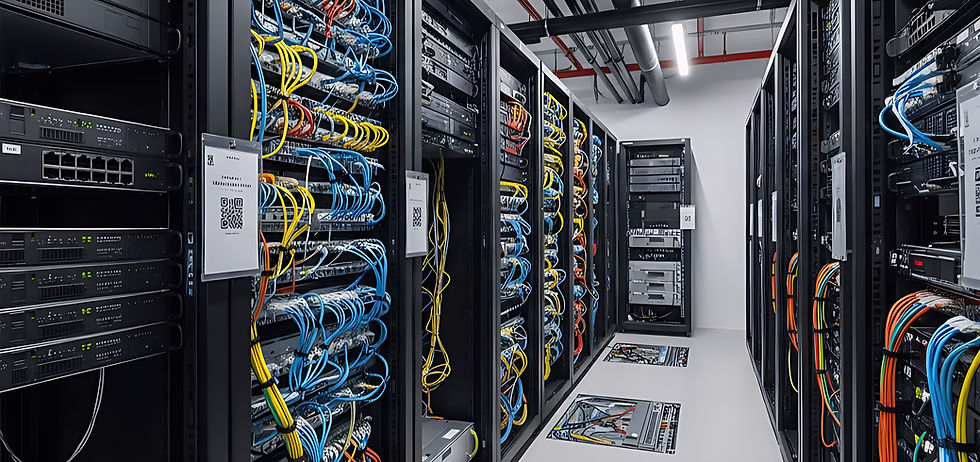
Structured Cabling Systems provide a highly organized and standardized "nervous system" for a building's data and communication needs. Unlike messy, disorganized wiring, structured cabling uses a consistent design to connect computers, phones, and other devices to the main network.

IBMS & ISMS System Installation refers to setting up the "Central Nervous System" and "Protective Shield" for a modern building’s information and operations.
These two systems work together to ensure that a facility is both smart (automated) and secure (protected from data threats).

Telecom Equipment Installation is the process of setting up the hardware and infrastructure that allows people to communicate through voice, data, and video.

Wireless Network Solutions provide the "invisible connections" that allow devices like smartphones, laptops, and tablets to access the internet and internal company data without being plugged into a wall. It uses radio waves to transmit information through the air, giving users the freedom to move around a building while staying connected.
%20Design%20and%20Testing.jpg)
Radio Frequency (RF) Design and Testing is the science of managing how "invisible" wireless signals travel through space. It involves planning, creating, and verifying the radio waves that carry data for cell phones, Wi-Fi, and satellite systems to ensure they are strong, clear, and do not interfere with each other.

RAN (Radio Access Network) for Integration & Configuration refers to the specialized process of setting up and "activating" the hardware that connects mobile devices (like smartphones) to the core telecommunications network. It is the final, critical step that turns a set of installed antennas and base stations into a functional cellular network.

Tower Infrastructure Solutions refer to the physical structures and essential support systems that hold telecommunications equipment high above the ground to provide wide-area signal coverage. They are the "backbone" of cellular and radio networks, ensuring that antennas have a clear line of sight to transmit data over long distances.

Mobile Network Integration is the high-level process of connecting various independent parts of a cellular network so they work together as one seamless system. It is the "grand assembly" that links local cell sites and towers to the national or global core network.

Distributed Antenna System (DAS) is a network of small antennas spread throughout a building to ensure everyone has a perfect cell phone signal, even in places where outdoor towers can't reach.

Communication Systems